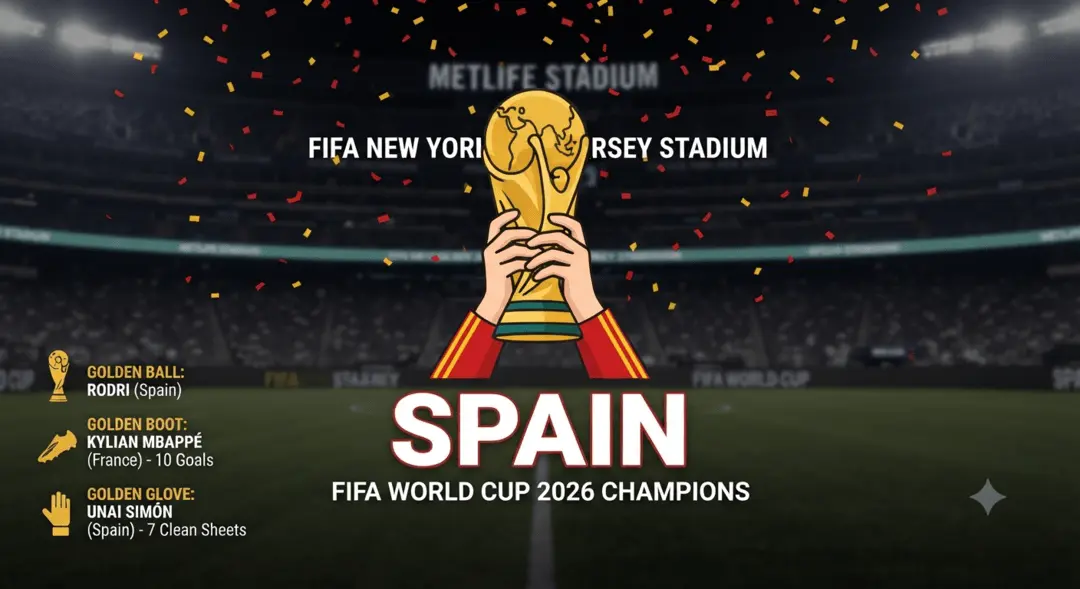
FIFA World Cup 2026 Final Review: Spain’s Historic Night, Records, and Full Award List.
Hello friends! Let’s talk about the FIFA World Cup 2026 final in detail, because honestly, this tournament gave us way more drama than most Netflix finales.
Spain and Argentina played the final on July 19, 2026, and anyone who stayed up all night watching it saw a genuine value-for-money match. Some fans call it one-sided. Fair point — Spain barely let Argentina breathe, dominating possession from the first whistle. Then came the real fireworks: deep into extra time, Ferran Torres struck in the 106th minute, and Spain lifted their second FIFA World Cup title.
This article breaks the tournament into four clear parts: FIFA’s history, the 2026 host country and format, the individual awards and prize money, and the historic world records that got rewritten this summer.
FIFA History
FIFA came into existence on May 21, 1904, in Paris. Here’s a classic trap: people assume the headquarters sits in Paris too, since that’s where it all began. It doesn’t. FIFA’s headquarters has always been in Zurich, Switzerland.
The first-ever World Cup took place in 1930. Uruguay hosted it and also won it, beating Argentina 4-2 in that inaugural final. Fast forward to today, and Brazil still holds the record for most World Cup titles, with five, all secured before 2002. Germany and Italy follow with four titles each.
Spain’s story adds a new layer to that history books. The team won its first title in 2010 in South Africa, and now, 16 years later, it has claimed its second in 2026.
FIFA World Cup 2026 Host Country and Format
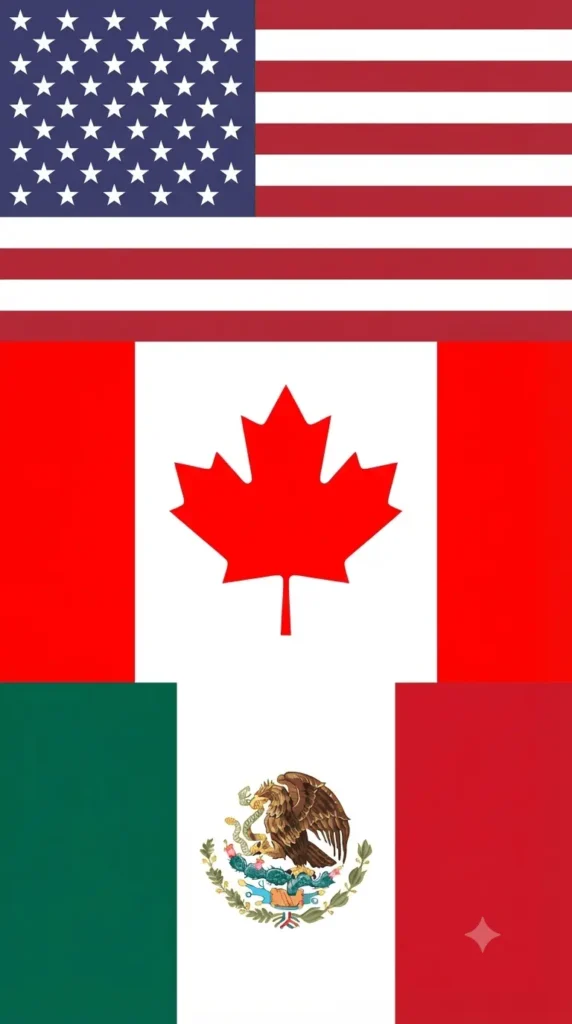
The FIFA World Cup 2026 host country wasn’t just one nation this time. Three countries — the USA, Canada, and Mexico — jointly hosted the tournament, marking the first-ever three-nation World Cup.
Mexico deserves a special mention here. It became the first country in history to host the World Cup three separate times: 1970, 1986, and now 2026. Estadio Azteca, its most iconic stadium, hosted the opening match on June 11, 2026, tying the tournament’s start neatly back to where Mexico’s World Cup journey began.
The format changed dramatically too. For the first time, 48 teams competed instead of the usual 32, which pushed the total number of matches from 64 all the way to 104. That’s a lot of football, and a lot of extra popcorn for fans.
The final itself took place at MetLife Stadium (officially called New York New Jersey Stadium for FIFA branding) in East Rutherford, New Jersey. Spain won 1-0, with substitute Ferran Torres scoring the only goal deep into extra time. It wasn’t a clean, easy win either — Argentina had a man sent off late in normal time, and Spain even saw a goal ruled out earlier in the match before Torres finally broke through.
As for the bronze medal, England claimed third place after a wild, high-scoring 6-4 win over France. Kylian Mbappé scored twice in that match for France, but it wasn’t enough.
Getting to that final was its own marathon. With 48 teams split across 12 groups, the qualifiers table looked packed months before a ball was even kicked in North America. The expanded format meant more group games, a new round of 32 in the brackets, and plenty of upsets along the way. Fans tracking the standings through each round watched debutant nations push past more established sides, which is exactly the kind of unpredictability FIFA hoped the bigger format would deliver.
FIFA World Cup 2026 Awards and Prize Money
Individual awards always add spice to a World Cup, and 2026 didn’t disappoint.
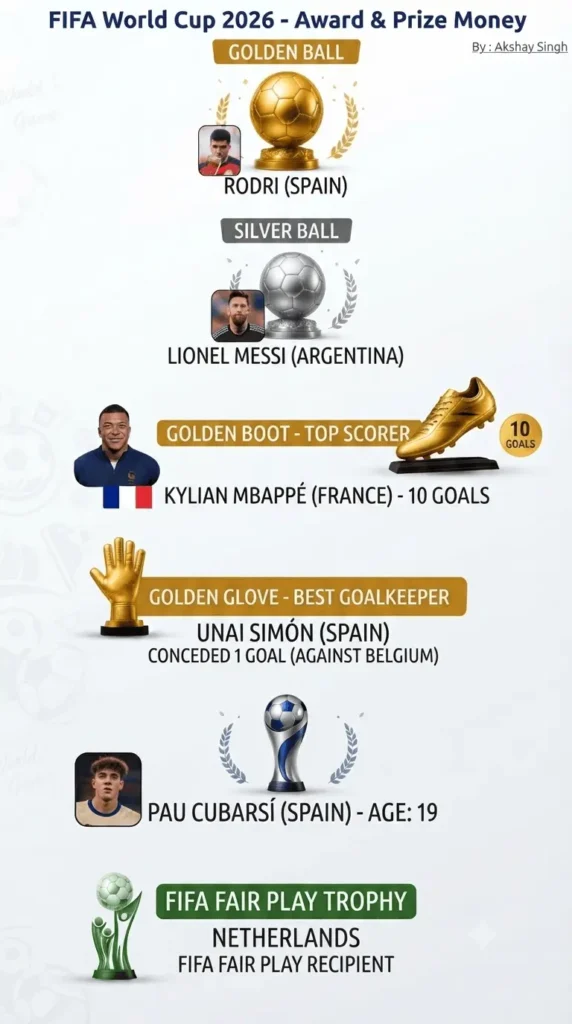
- Golden Ball (Best Player): Rodri (Spain)
- Silver Ball: Lionel Messi (Argentina)
- Golden Boot (Top Scorer): Kylian Mbappé (France), with 10 goals
- Golden Glove (Best Goalkeeper): Unai Simón (Spain), who conceded just one goal in the entire tournament, against Belgium
- FIFA Young Player Award: Pau Cubarsí (Spain), age 19
- FIFA Fair Play Trophy: Netherlands
Rodri’s award makes sense once you look at Spain’s defensive record. Spain’s captain anchored the midfield so tightly that Argentina barely got a shot away in the final. Meanwhile, Mbappé’s Golden Boot came as no surprise, since he entered the final day two goals clear of Messi in the scoring charts.
Now, the money talk. FIFA’s performance-based prize pool for 2026 reached $655 million. Spain, as champions, took home $50 million. Argentina, as runners-up, earned $33 million, and England picked up $29 million for finishing third. Every one of the 48 participating nations walked away with a share of the pool, even the teams eliminated in the group stage.
Historic World Records Set at the 2026 World Cup
This tournament rewrote several record books, and honestly, some of these numbers feel almost unfair to future players trying to catch up.
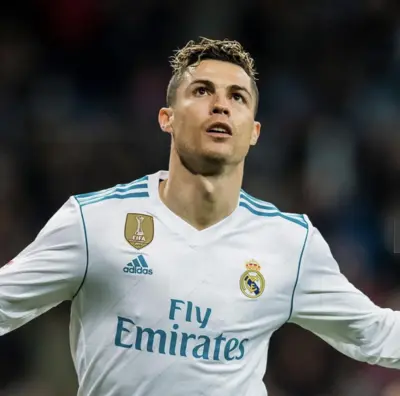
1. Cristiano Ronaldo (Portugal) became the first player ever to score in six different World Cups, stretching from 2006 all the way to 2026. Nobody, not even Messi, had managed that before.
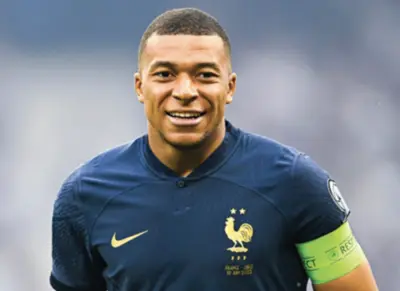
2. Kylian Mbappé (France) won the Golden Boot in two consecutive World Cups, 2022 and 2026. He also became the all-time top scorer in World Cup history, finishing with 22 career goals and passing Messi’s previous mark of 21.
3. Spain’s defense set a new benchmark for a champion team, conceding only one goal across all eight matches on their way to the title. That’s not just good defending; that’s borderline unfair to opposing strikers.
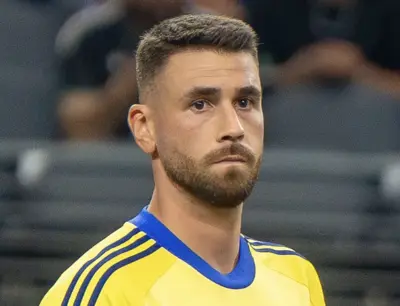
4. Unai Simón (Spain) recorded seven clean sheets during the tournament, including one in the final itself, cementing his Golden Glove win.
Put these four records side by side, and a theme emerges: 2026 was as much a tournament of individual milestones as it was a team competition. Ronaldo closed out his World Cup story on a historic note, Mbappé overtook a legend in Messi, and Spain’s back line quietly built one of the best defensive campaigns any champion has ever produced.
Frequently Asked Questions
Sources: FIFA.com official tournament reports, ESPN match reports and statistics, Reuters and Associated Press coverage via ABC News and NBC News, Bleacher Report and NBC Sports award coverage, Yahoo Sports and Al Jazeera prize money breakdowns.
I am Usman, known as StreamSleuth – a Saudi based streaming app tester and the person behind YacineTVInfo.com. Since 2022 I have been installing, breaking and troubleshooting Yacine TV across Android phones, and troubleshooting Yacine TV across Android phones, Firestick, and Android TV boxes to write guides that actually work. Self-taught, hands-on, and allergic to copy-pasted device.